Can Large Houses Ever Truly Be Green?
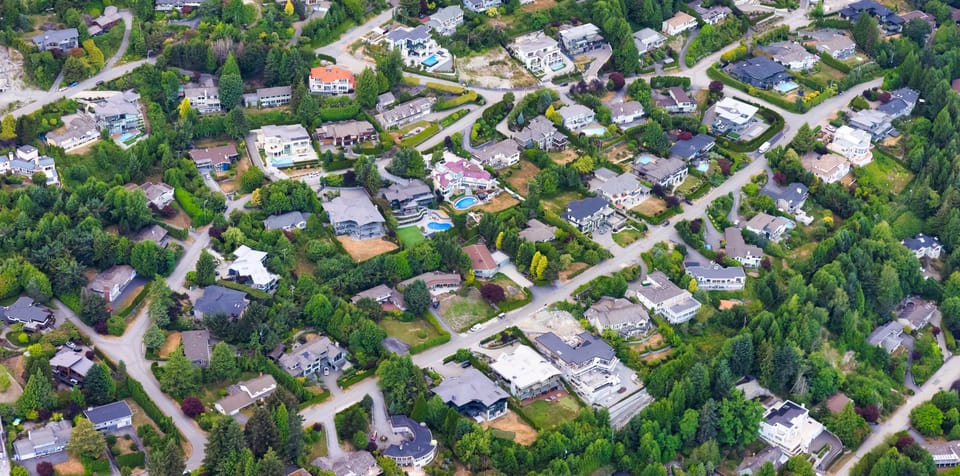
For decades, bigger homes have been marketed as symbols of success, progression, and comfort. High ceilings, multiple living rooms, extra guest suites, and entertainment spaces, these features promise a better quality of life. But as our houses grow, an uncomfortable question lingers quietly in the background:
Are we building beyond what we truly need?
At a time when climate change, resource depletion, and rising energy costs dominate global conversations, the size of our homes deserves closer attention.
Smaller Families, Larger Houses
Across many countries, family sizes have gradually decreased. Yet paradoxically, the average home size has increased. More space per person has become the norm rather than the exception.
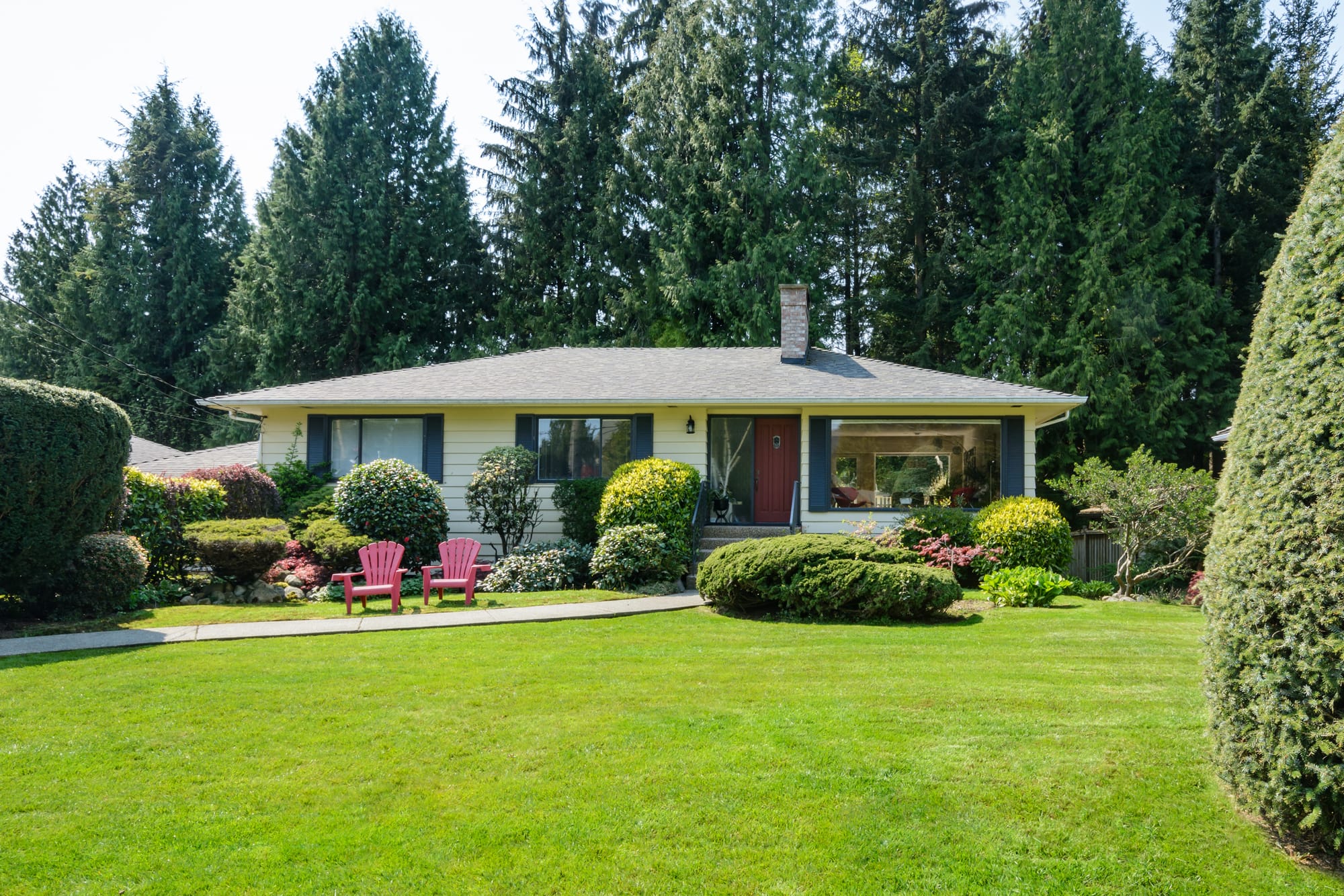
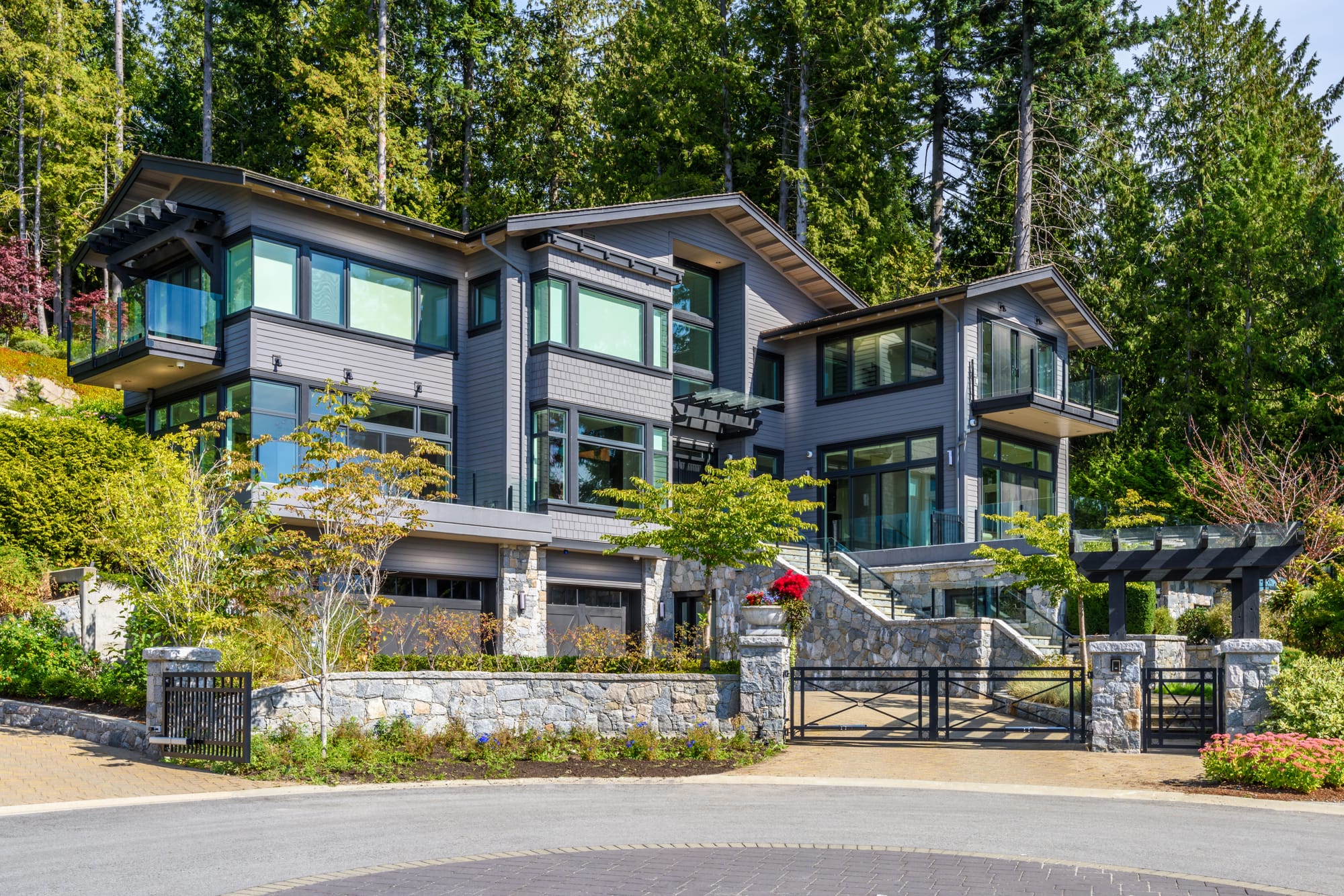
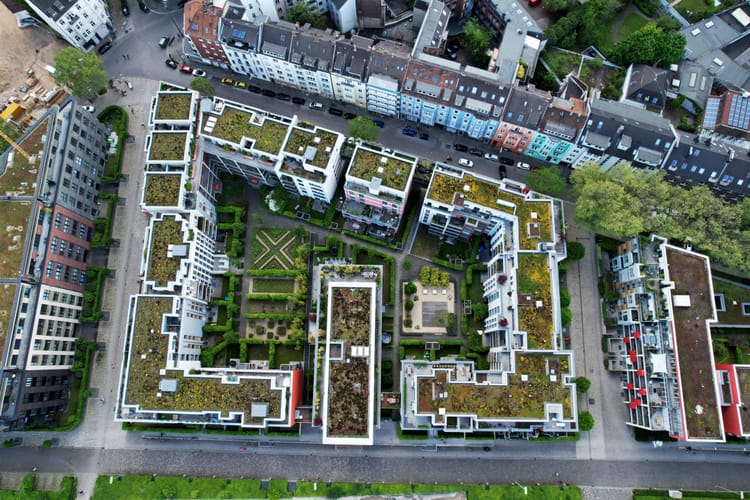
While families grow smaller, homes have grown larger and more complex—intensifying land use, construction materials, and long-term operational energy. Source: Envato Elements.
It doesn't seem like a problem, really. I mean, who wouldn't want an extra room for work, exercise, hobbies, or hosting guests?
The environmental reality, however, tells a different story. Every additional square metre of building space requires more building materials, more land space, more energy for cooling and heating, and more maintenance over the home's lifespan. Even before a house is occupied, resources have already been extracted, transported, manufactured, and assembled.
The larger the structure, the greater the cumulative impact.
“Green” — But How Big?
Today, many homes are designed with energy-efficient appliances, better insulation, and sustainably sourced building materials. They are also marketed as “green,” often supported by environmental certifications and ratings. These improvements are important and deserve the encouragement of both society and government.
But certification does not automatically neutralise scale.
Size can subtly undermine environmental gains. A very large house, even if technically efficient, still consumes more resources than a modest one. The building has an astronomical amount of flooring, as well as higher cooling, water, and material use. Longer hallways require additional fixtures. Larger rooms demand more heating and cooling. Expansive layouts extend pipework and ductwork, resulting in greater embodied resources and operational losses. Complex forms and multiple rooflines may enhance architectural expression, but they enlarge surface area and elevate energy demand.
Efficiency boosts performance for every single square metre. In simple terms, a bigger “green” house can still carry a bigger footprint.
Sometimes, the most powerful environmental strategy is not adding more technology but reducing unnecessary space in the first place.
When Markets Shape Our Needs
Part of the issue lies in how housing is marketed and financed. Low interest rates and property speculation have encouraged buyers to maximise what they can purchase. The guiding question becomes:
“How large a house can I afford?”
Rarely do we pause to ask: “How large a house do I actually need?”
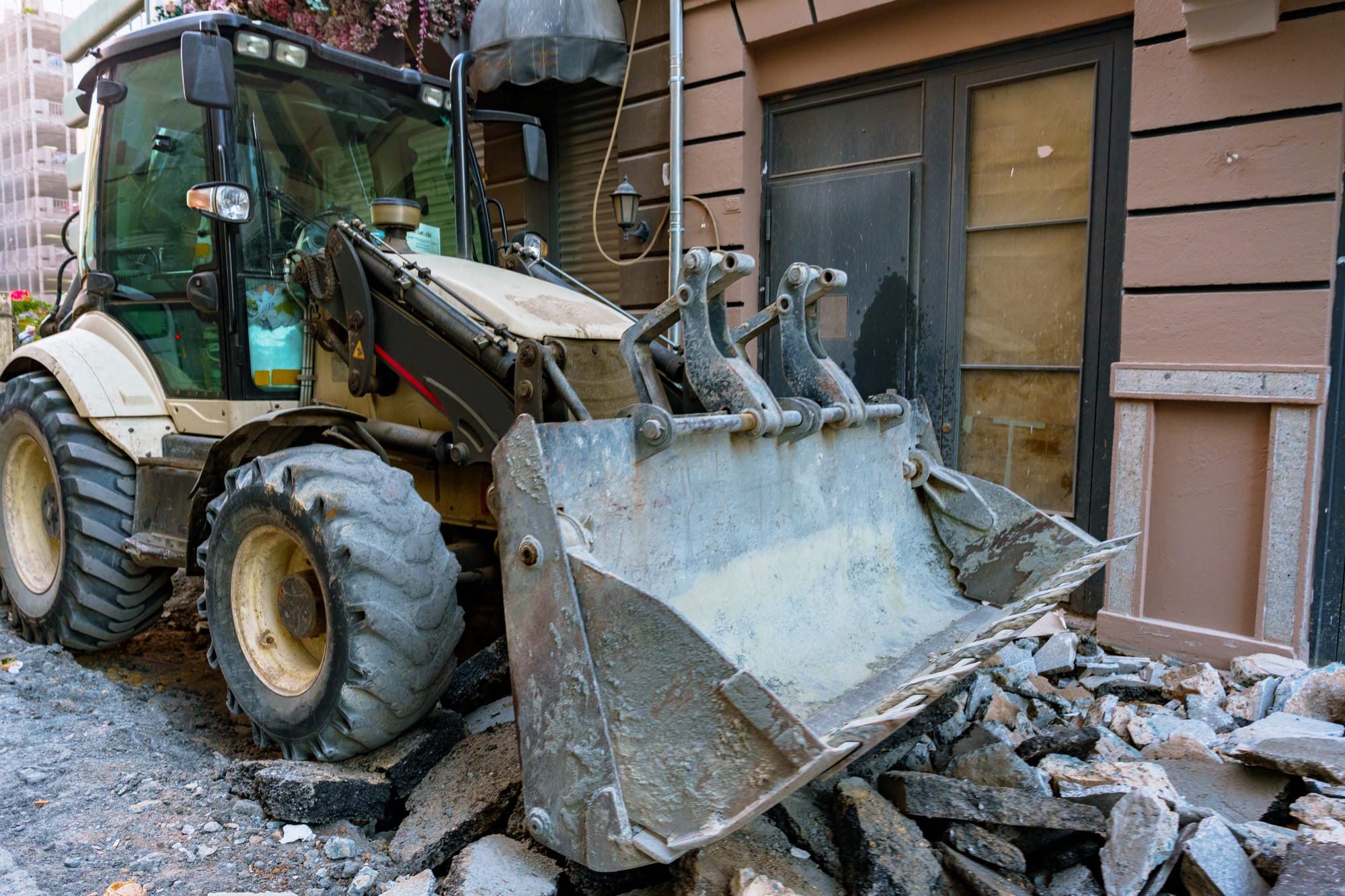
Developers respond to demand. Larger homes often yield higher profits per unit of land. In some neighbourhoods, perfectly functional homes are demolished to make way for significantly larger ones. Not only does this displace embodied material and reset the environmental clock, but it also involves new materials, construction, and additional energy for decades. Investing in value rather than just need has environmental consequences.
The Long-Term Commitment
A house is not a short-term purchase. It is a long-term environmental commitment.
Vehicles may be replaced every few years, but homes stand for decades. The energy required to operate them accumulates year after year. Oversized houses lock in higher resource consumption for generations.
And because buildings can last a lifetime, decisions made today can shape environmental outcomes far into the future.
This is why size cannot be dismissed as just a lifestyle preference. It is a sustainability issue.
What Does “Enough” Look Like?
Rethinking home size does not mean sacrificing comfort or dignity. It means designing intelligently and living intentionally.
A well-planned smaller home can feel spacious, functional, and uplifting. Natural light, thoughtful layouts, multipurpose room arrangements, and good ventilation all work together to create a well-designed, high-quality living environment without excessive floor area. Design excellence is often not about expanding, but about optimising.
At home, I encounter the concept of “enough” in a very personal way. An upstairs corner of my house serves as my office, library, nap spot, and mini gym all rolled into one. It's where I write academic papers, read books, take short restorative naps, and lift weights, sometimes all before dinner. The footprint is modest, but the possibilities are not. With careful planning and purposeful design, a single compact space can serve multiple roles effectively and comfortably.
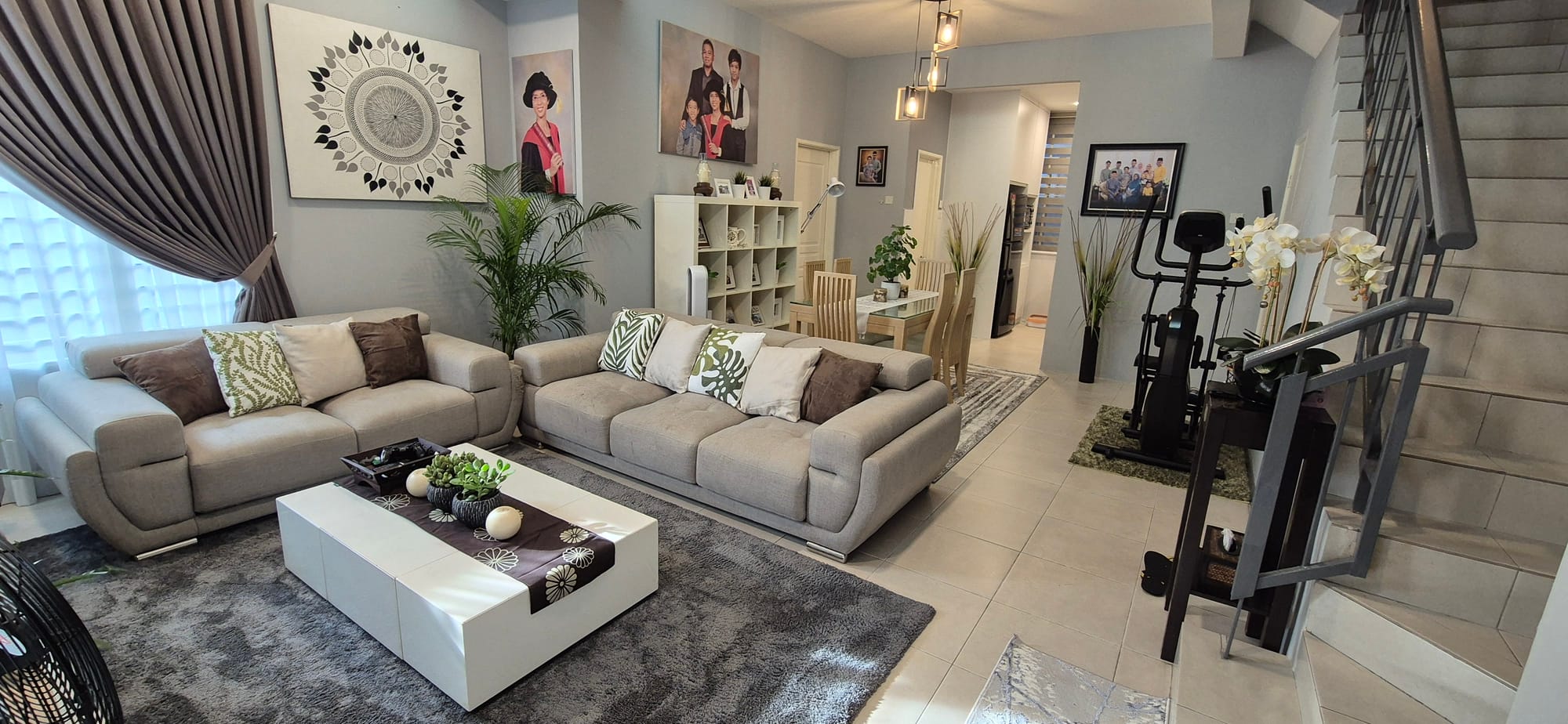
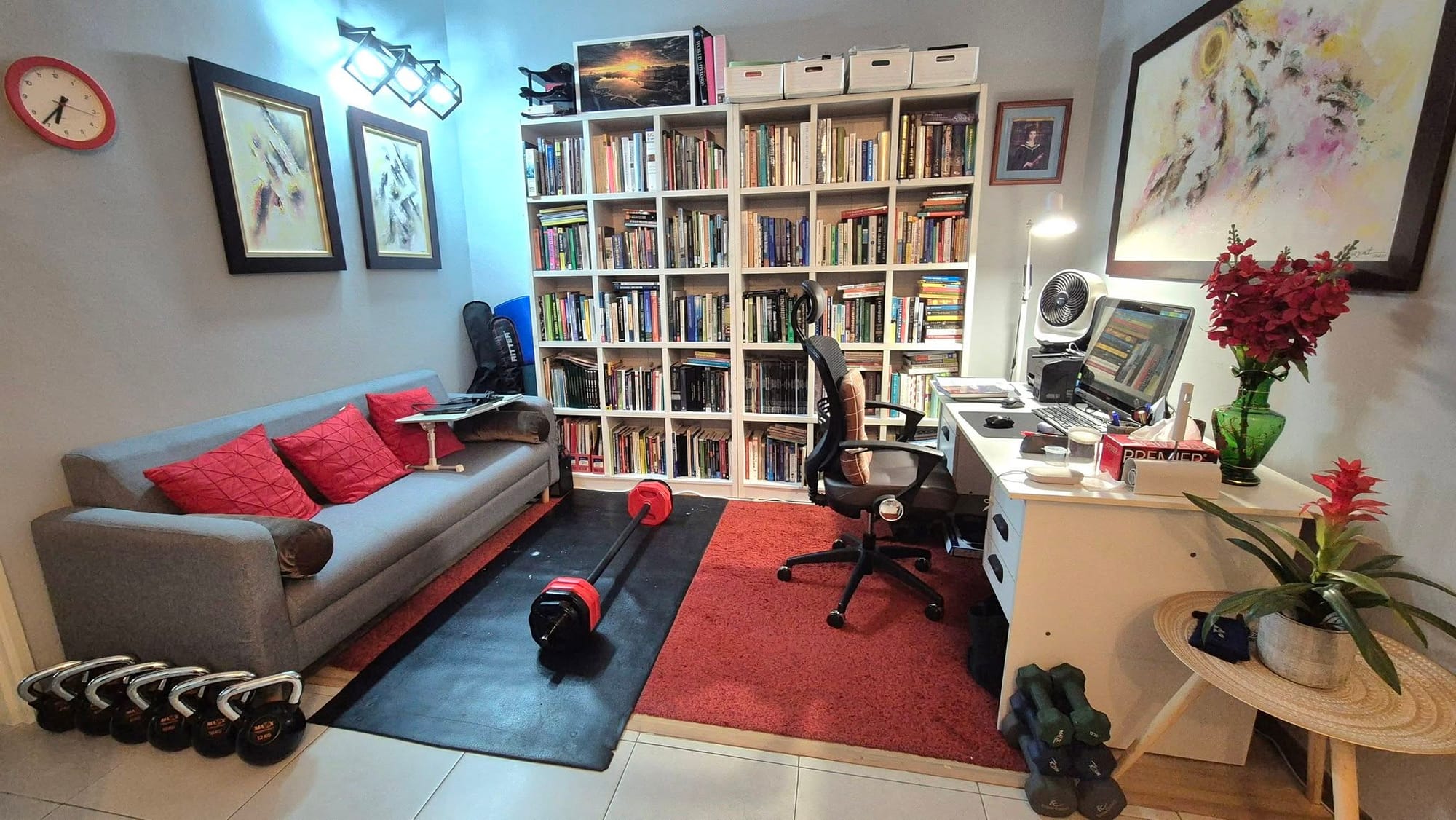
Left: The author’s compact living and dining area illustrates how integrated open-plan design and efficient spatial planning can create comfort, functionality, and even accommodate daily exercise—without excessive floor area. Right: In the same home, a single upstairs corner serves multiple functions—office, library, rest space, and mini gym.
Communities benefit as well. More compact homes support better land use, reduce infrastructure demand, and encourage walkable, efficient, and human-scaled neighbourhoods. Rather than expanding endlessly, we can focus on creating vibrant, liveable environments without imposing unnecessary strain on natural resources.
Perhaps “enough” is not a fixed number of square metres, but a mindset, one that values thoughtful design, purposeful living, and responsibility toward the planet we share.
A Shift in Perspective
As environmental challenges intensify, the conversation must evolve from individual affordability to collective responsibility. It is no longer only about what one household can afford, but about what our cities, ecosystems, and climate can sustain.
Bigger homes may offer status and comfort, but they also carry invisible costs, costs borne by forests, energy systems, and future generations.
Perhaps the real measure of progress is not how much space we can build, but how wisely we choose to use it.
In the end, sustainability is not only about materials and technology. It is about restraint, about redefining what “enough” truly means.
Are Bigger Homes Really Greener?
If this question resonates with you, subscribe for more reflections on sustainability, design, and the ethical choices shaping our built environment.

Member discussion